Mathias Male
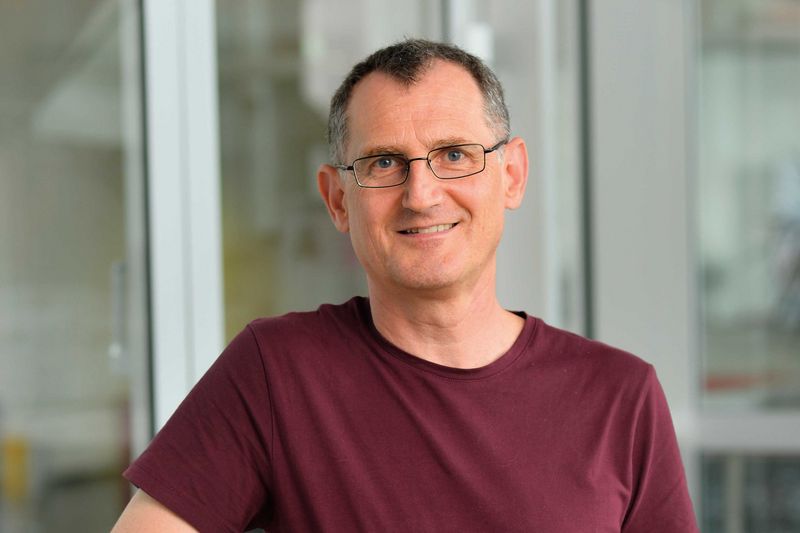
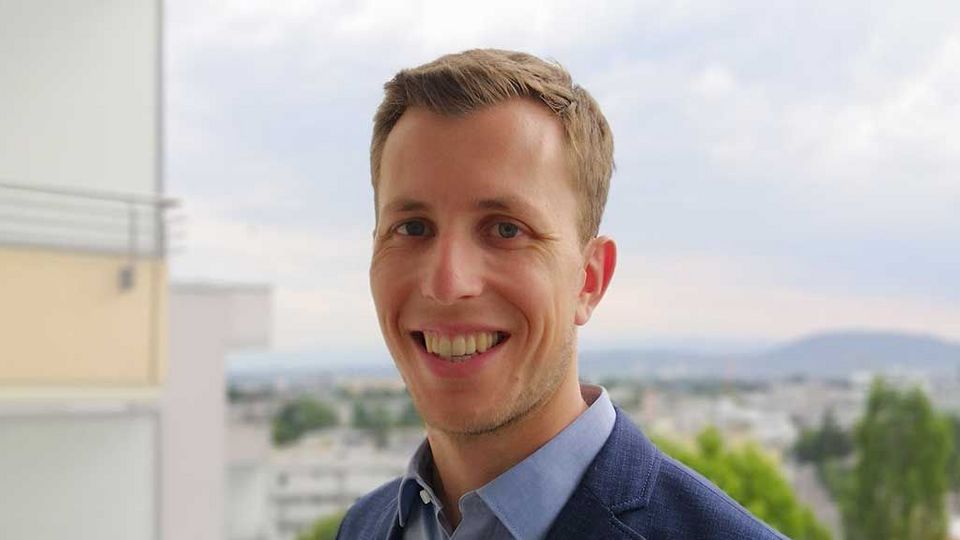
Mathias Male schloss den Bachelorstudiengang "System Engineering" mit dem Schwerpunkt Mechatronik an der FH Kärnten erfolgreich ab. Seine Begeisterung…
Green Mechatronics combines mechanics, electronics, and software. The focus is on robotics, automation, and the interaction of sensors and actuators. You will learn how technical systems are constructed, considering reliability, efficiency, and their entire life cycle.
In modern laboratories and practical projects, you will directly apply what you have learned and transfer theoretical content to specific tasks. In this way, you will deepen your technical understanding of mechatronics.
Sustainability provides a unifying framework and guides your actions from the outset.
In the online info sessions, the program director will present the course in detail. You will receive valuable information on the course content, internships, admission requirements and the wide range of career opportunities.
Please contact us if you have any questions about your studies:
Level of qualification
Bachelor
ECTS Credits
180
Tuition fees
€ 363.36 / semester
Qualification awarded
Bachelor of Science in Engineering
Duration of study
6 semester
ÖH (Austrian Student Union) fee
€ 25.20 / semester
Language of instruction
German; additionally English
from 2026 on
FH Campus
Villach
Starting in the winter semester of 2026, students from third countries (non-EU/EEA countries) will be charged a tuition fee of € 500 per semester. Further information.

With over 80 Study & Work partner companies and organizations, our university offers students the opportunity to combine studying and working!
Recommendations from the university to help you combine study and work as optimally as possible.
Study & Work for full-time students
Study & Work for part-time students
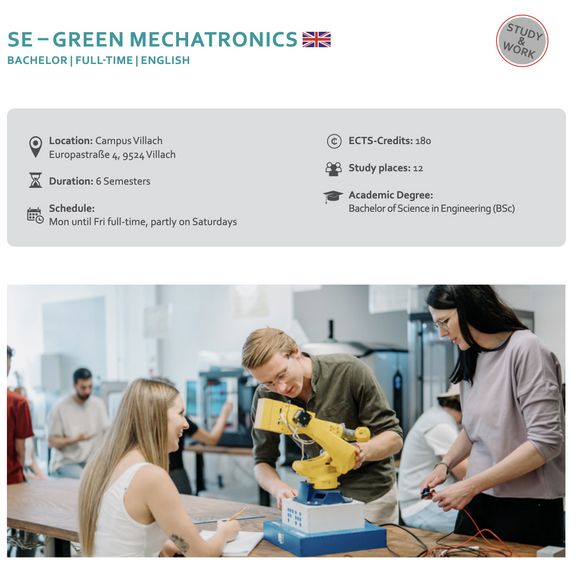
In the Green Mechatronics program, students engage with the mechanical, electronic, and digital fundamentals of modern systems. They receive a thorough introduction to control engineering, dynamics, and industrial automation, and work with models and simulations to analyse dynamic processes and transfer them to real systems. In Embedded Systems, they learn how hardware and software are coordinated. Sustainability forms a unifying framework: through life cycle assessment, eco-design, and circular economy, they learn how technical concepts are planned, evaluated, and implemented throughout their entire life cycle.
No special prior knowledge is required for the Green Mechatronics program. The program is open to graduates of all types of schools, provided they have an interest in technology and are willing to work hard.
To facilitate entry, we offer preparatory courses in mathematics, computer science, and physics as part of the FH Add-Ons program before the start of the course.
Ideally, you should enjoy technical challenges, be curious about science, and have a basic understanding of technical concepts. Creativity and logical thinking skills will support your learning during your studies.
A lack of university entrance qualifications can be compensated for by relevant professional qualifications and attendance at a preparatory course.
Upon completion of your studies, you will have a fundamental understanding of engineering and be able to integrate mechanical, electronic, and software-related aspects in technical problems.
You will use models, simulations, and basic control engineering methods to understand dynamic processes and to plan and improve technical procedures. In technical mechanics, you will work on static and dynamic tasks, taking design aspects into account.
You will program industrial controllers and robots and use their functions purposefully. You will identify faults, maintain systems, and improve processes. Your knowledge of automation and data analysis will enable you to enhance processes.
| Lecture | Type | SPPS | ECTS-Credits | Course number |
|---|---|---|---|---|
| Electrical and Electronic Engineering 2 | ILV | 6,0 | 7,5 | B2.05270.20.650 |
| English 2 | SE | 2,0 | 2,0 | B2.00000.20.031 |
| Computer Science 2: Algorithms and Object-oriented programming | ILV | 4,0 | 5,0 | B2.00000.20.050 |
| Engineering Mathematics 2 | ILV | 4,0 | 5,0 | B2.00000.20.010 |
| Physics 2 | ILV | 3,0 | 4,0 | B2.05270.20.090 |
| Signal Processing 1 | ILV | 2,0 | 2,5 | B2.05270.20.080 |
| Systems Engineering | ILV | 3,0 | 4,0 | B2.05270.20.110 |
| Lecture | Type | SPPS | ECTS-Credits | Course number |
|---|---|---|---|---|
| Bus Systems and Protocols | ILV | 2,0 | 2,5 | B2.05270.40.700 |
| English 4 | SE | 2,0 | 2,0 | B2.00000.40.351 |
| Microcontroller 2 | ILV | 3,0 | 4,0 | B2.05270.40.180 |
| Project 1 | PT | 3,0 | 5,0 | B2.05270.40.170 |
| Control Engineering 2 - Group I | ILV | 2,0 | 2,5 | B2.05270.40.280 |
| Control Engineering 2 - Group II | ILV | 2,0 | 2,5 | B2.05270.40.280 |
| Study program: Automisation | Type | SPPS | ECTS-Credits | Course number |
| Applied Data Analysis | ILV | 2,0 | 2,5 | B2.05271.40.320 |
| Industrial Controls and Industrial Plants | ILV | 3,0 | 4,5 | B2.05271.40.360 |
| Engineering Mechanics Selected Topics | ILV | 3,0 | 4,5 | B2.05271.40.350 |
| Study program: Electronics | Type | SPPS | ECTS-Credits | Course number |
| Electronic Circuit Technology 2 | ILV | 3,0 | 4,5 | B2.05272.40.330 |
| Device Development | ILV | 3,0 | 4,5 | B2.05272.40.260 |
| Semiconductor Physics | ILV | 2,0 | 2,5 | B2.05272.40.340 |
| Study program: Robotics | Type | SPPS | ECTS-Credits | Course number |
| Industrial Controls and Industrial Plants | ILV | 3,0 | 4,5 | B2.05271.40.360 |
| Robotics | ILV | 2,0 | 2,5 | B2.05271.40.310 |
| Engineering Mechanics Selected Topics | ILV | 3,0 | 4,5 | B2.05271.40.350 |
| Lecture | Type | SPPS | ECTS-Credits | Course number |
|---|---|---|---|---|
| Bachelor's thesis seminar 2 | SE | 1,0 | 1,0 | B2.05270.60.480 |
| Bachelor's exam | DP | 0,0 | 2,0 | B2.05270.60.470 |
| Internship | BOPR | 0,0 | 21,0 | B2.00000.60.460 |
| Seminar Internship | SE | 2,0 | 2,0 | B2.00000.60.470 |
| Systems Engineering Selected Topics - Group I | SE | 3,0 | 4,0 | B2.05270.60.460 |
| Systems Engineering Selected Topics - Group II | SE | 3,0 | 4,0 | B2.05270.60.460 |
| Lecture | Type | SPPS | ECTS-Credits | Course number |
|---|---|---|---|---|
| Experimental Physics 1: Motion | ILV | 3,5 | 5,0 | B2.05270.10.020 |
| Computer Science | ILV | 3,5 | 5,0 | B2.05270.10.070 |
| Mathematics for Science 1 | ILV | 3,5 | 5,0 | B2.05270.10.010 |
| Concepts and Principles of Sustainability | ILV | 2,0 | 2,5 | B2.05270.10.050 |
| Circuit Analysis Methods | ILV | 3,5 | 5,0 | B2.05270.10.030 |
| Starting Project | ILV | 3,5 | 5,0 | B2.05270.10.060 |
| Study Culture at University: Learning and Communication strategies | ILV | 1,5 | 2,5 | B2.05270.10.040 |
| Lecture | Type | SPPS | ECTS-Credits | Course number |
|---|---|---|---|---|
| English 3 | SE | 2,0 | 3,5 | B2.00000.30.011 |
| Measurement and Sensor Technology | ILV | 4,0 | 5,0 | B2.05270.30.930 |
| Microcontroller 1 | ILV | 3,0 | 3,5 | B2.05270.30.680 |
| Project Management | ILV | 1,0 | 2,0 | B2.00000.70.310 |
| Control Engineering 1 - Group I | ILV | 3,0 | 3,5 | B2.05270.30.770 |
| Control Engineering 1 - Group II | ILV | 3,0 | 3,5 | B2.05270.30.770 |
| Signal and Image Processing | ILV | 3,0 | 4,0 | B2.05270.30.120 |
| Scientific Work | VO | 1,0 | 1,5 | B2.00000.00.320 |
| Study program: Electronics | Type | SPPS | ECTS-Credits | Course number |
| Electronic Circuit Technology 1 | ILV | 5,0 | 7,0 | B2.05272.30.160 |
| Study program: Mechatronics | Type | SPPS | ECTS-Credits | Course number |
| Engineering Mechanics and Construction | ILV | 5,0 | 7,0 | B2.05271.30.920 |
| Lecture | Type | SPPS | ECTS-Credits | Course number |
|---|---|---|---|---|
| Bachelor's thesis seminar 1 | SE | 1,0 | 1,0 | B2.05270.50.480 |
| English 5: Scientific Writing | SE | 1,0 | 2,0 | B2.00000.50.401 |
| Presentation Skills | SE | 1,0 | 1,5 | B2.00000.50.430 |
| Project 2 | PT | 5,0 | 9,0 | B2.05270.50.190 |
| Quality Management | VO | 1,0 | 1,5 | B2.00000.50.410 |
| Study program: Automisation | Type | SPPS | ECTS-Credits | Course number |
| Dynamics | ILV | 2,0 | 2,5 | B2.05271.50.360 |
| Electrical Drives and Actuators | ILV | 3,0 | 3,5 | B2.05271.50.300 |
| Industrial Controls Selected Topics | ILV | 2,0 | 3,0 | B2.05271.50.780 |
| Cleanroom Technology | ILV | 2,0 | 3,0 | B2.05271.50.380 |
| Smart Automation | ILV | 2,0 | 3,0 | B2.05271.50.790 |
| Study program: Electronics | Type | SPPS | ECTS-Credits | Course number |
| EMV | LB | 2,0 | 3,5 | B2.05272.50.230 |
| Digital Systems Design | ILV | 2,0 | 2,5 | B2.05272.50.250 |
| Integrated Circuits Basics | ILV | 2,0 | 2,5 | B2.05272.50.390 |
| Power Electronics | ILV | 2,0 | 2,5 | B2.05272.50.400 |
| Communication Engineering | ILV | 3,0 | 4,0 | B2.05272.50.410 |
| Study program: Robotics | Type | SPPS | ECTS-Credits | Course number |
| Dynamics | ILV | 2,0 | 2,5 | B2.05271.50.360 |
| Electrical Drives and Actuators | ILV | 3,0 | 3,5 | B2.05271.50.300 |
| Mechatronic Systems | ILV | 2,0 | 3,0 | B2.05271.50.370 |
| Mobile Robotics | ILV | 2,0 | 3,0 | B2.05271.50.310 |
| Robot Programming | LB | 2,0 | 3,0 | B2.05271.50.350 |
| Lecture | Type | SPPS | ECTS-Credits | Course number |
|---|---|---|---|---|
| Embedded Systems Programming | ILV | 3,5 | 5,0 | B2.05270.20.050 |
| Experimental Physics 2: Electrodynamics | ILV | 3,5 | 5,0 | B2.05270.20.020 |
| Semiconductors and Circuits | ILV | 3,5 | 5,0 | B2.05270.20.030 |
| Mathematics for Science 2 | ILV | 3,5 | 5,0 | B2.05270.20.010 |
| Circular Economy and Waste Materials | IL | 3,5 | 5,0 | B2.05270.20.040 |
| Signals and Systems 1 | ILV | 3,5 | 5,0 | B2.05270.20.060 |
| Lecture | Type | SPPS | ECTS-Credits | Course number |
|---|---|---|---|---|
| Bus Systems and Protocols | ILV | 2,0 | 2,5 | B2.05270.40.700 |
| English 4 | SE | 2,0 | 2,0 | B2.00000.40.351 |
| Microcontroller 2 | ILV | 3,0 | 4,0 | B2.05270.40.180 |
| Project 1 | PT | 3,0 | 5,0 | B2.05270.40.170 |
| Control Engineering 2 | ILV | 2,0 | 2,5 | B2.05270.40.280 |
| Elective Subject | ILV | 2,0 | 2,5 | B2.05270.40.300 |
| Study program: Automisation | Type | SPPS | ECTS-Credits | Course number |
| Applied Data Analysis | ILV | 2,0 | 2,5 | B2.05271.40.320 |
| Industrial Controls and Industrial Plants | ILV | 3,0 | 4,5 | B2.05271.40.360 |
| Engineering Mechanics Selected Topics | ILV | 3,0 | 4,5 | B2.05271.40.350 |
| Study program: Electronics | Type | SPPS | ECTS-Credits | Course number |
| Electronic Circuit Technology 2 | ILV | 3,0 | 4,5 | B2.05272.40.330 |
| Device Development | ILV | 3,0 | 4,5 | B2.05272.40.260 |
| Semiconductor Physics | ILV | 2,0 | 2,5 | B2.05272.40.340 |
| Study program: Robotics | Type | SPPS | ECTS-Credits | Course number |
| Industrial Controls and Industrial Plants | ILV | 3,0 | 4,5 | B2.05271.40.360 |
| Robotics | ILV | 2,0 | 2,5 | B2.05271.40.310 |
| Engineering Mechanics Selected Topics | ILV | 3,0 | 4,5 | B2.05271.40.350 |
| Lecture | Type | SPPS | ECTS-Credits | Course number |
|---|---|---|---|---|
| Bachelor's thesis seminar 2 | SE | 1,0 | 1,0 | B2.05270.60.480 |
| Bachelor's exam | DP | 0,0 | 2,0 | B2.05270.60.470 |
| Internship | BOPR | 0,0 | 21,0 | B2.00000.60.460 |
| Seminar Internship | SE | 2,0 | 2,0 | B2.00000.60.470 |
| Systems Engineering Selected Topics | SE | 3,0 | 4,0 | B2.05270.60.460 |
| Lecture | Type | SPPS | ECTS-Credits | Course number |
|---|---|---|---|---|
| Experimental Physics 1: Motion | ILV | 3,5 | 5,0 | B2.05270.10.020 |
| Computer Science | ILV | 3,5 | 5,0 | B2.05270.10.070 |
| Mathematics for Science 1 | ILV | 3,5 | 5,0 | B2.05270.10.010 |
| Concepts and Principles of Sustainability | ILV | 2,0 | 2,5 | B2.05270.10.050 |
| Circuit Analysis Methods | ILV | 3,5 | 5,0 | B2.05270.10.030 |
| Starting Project | ILV | 3,5 | 5,0 | B2.05270.10.060 |
| Study Culture at University: Learning and Communication strategies | ILV | 1,5 | 2,5 | B2.05270.10.040 |
| Lecture | Type | SPPS | ECTS-Credits | Course number |
|---|---|---|---|---|
| Digital Signal Processing | ILV | 1,5 | 2,0 | B2.05270.30.030 |
| Dynamical Systems | ILV | 2,0 | 3,0 | B2.05270.30.040 |
| Embedded System Applications | ILV | 3,5 | 5,0 | B2.05270.30.060 |
| Lifecyle Assessment and Eco Design | ILV | 3,5 | 5,0 | B2.05270.30.050 |
| Measurement Systems | ILV | 3,5 | 5,0 | B2.05270.30.010 |
| AC Analysis | ILV | 3,5 | 5,0 | B2.05270.30.020 |
| Study program: Green Electronics | Type | SPPS | ECTS-Credits | Course number |
| Digital Circuits Design | ILV | 3,5 | 5,0 | B2.05270.30.070 |
| Study program: Green Mechatronics | Type | SPPS | ECTS-Credits | Course number |
| Mechanical Systems | ILV | 3,5 | 5,0 | B2.05270.30.070 |
| Lecture | Type | SPPS | ECTS-Credits | Course number |
|---|---|---|---|---|
| Bachelor's thesis seminar 1 | SE | 1,0 | 1,0 | B2.05270.50.480 |
| English 5: Scientific Writing | SE | 1,0 | 2,0 | B2.00000.50.401 |
| Presentation Skills | SE | 1,0 | 1,5 | B2.00000.50.430 |
| Project 2 | PT | 5,0 | 9,0 | B2.05270.50.190 |
| Quality Management | VO | 1,0 | 1,5 | B2.00000.50.410 |
| Study program: Automisation | Type | SPPS | ECTS-Credits | Course number |
| Dynamics | ILV | 2,0 | 2,5 | B2.05271.50.360 |
| Electrical Drives and Actuators | ILV | 3,0 | 3,5 | B2.05271.50.300 |
| Industrial Controls Selected Topics | ILV | 2,0 | 3,0 | B2.05271.50.780 |
| Cleanroom Technology | ILV | 2,0 | 3,0 | B2.05271.50.380 |
| Smart Automation | ILV | 2,0 | 3,0 | B2.05271.50.790 |
| Study program: Electronics | Type | SPPS | ECTS-Credits | Course number |
| EMV | LB | 2,0 | 3,5 | B2.05272.50.230 |
| Digital Systems Design | ILV | 2,0 | 2,5 | B2.05272.50.250 |
| Integrated Circuits Basics | ILV | 2,0 | 2,5 | B2.05272.50.390 |
| Power Electronics | ILV | 2,0 | 2,5 | B2.05272.50.400 |
| Communication Engineering | ILV | 3,0 | 4,0 | B2.05272.50.410 |
| Study program: Robotics | Type | SPPS | ECTS-Credits | Course number |
| Dynamics | ILV | 2,0 | 2,5 | B2.05271.50.360 |
| Electrical Drives and Actuators | ILV | 3,0 | 3,5 | B2.05271.50.300 |
| Mechatronic Systems | ILV | 2,0 | 3,0 | B2.05271.50.370 |
| Mobile Robotics | ILV | 2,0 | 3,0 | B2.05271.50.310 |
| Robot Programming | LB | 2,0 | 3,0 | B2.05271.50.350 |
The Green Mechatronics program provides students with a fundamental understanding of dynamic systems that operate with sensors and actuators, demonstrating how mechanics, electronics, and software interact. Whether in robotics, automation technology, mechanical engineering, or interdisciplinary development projects, your ability to integrate mechanics, electronics, and software is in demand everywhere. The programs strong practical focus enables you to assume responsibility quickly and apply your knowledge directly in your professional life. Alternatively, you may choose to deepen your expertise in a master's program, depending on your personal goals.
Fields of activity for Green Mechatronics graduates include:
Successful completion of the bachelor's degree program in Systems Engineering – Green Mechatronics qualifies graduates to pursue a four-semester master's degree program in Engineering & IT at Carinthia University of Applied Sciences, or a master's degree program in Engineering & IT at another university of applied sciences or university.
The master's program in Systems Design is a direct continuation of the bachelor's program and is a modern engineering course aimed at teaching students how to design and implement complex technical systems. Graduates are able to understand and solve challenging technical tasks in fields ranging from embedded systems (electronics) to mechatronics and control engineering, as well as to further develop systems.
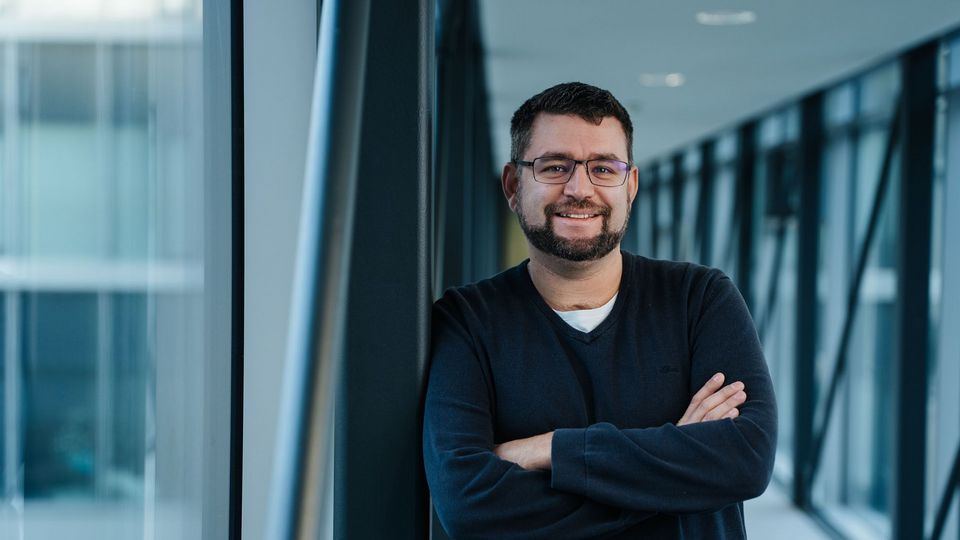
Mathias Male schloss den Bachelorstudiengang "System Engineering" mit dem Schwerpunkt Mechatronik an der FH Kärnten erfolgreich ab. Seine Begeisterung…
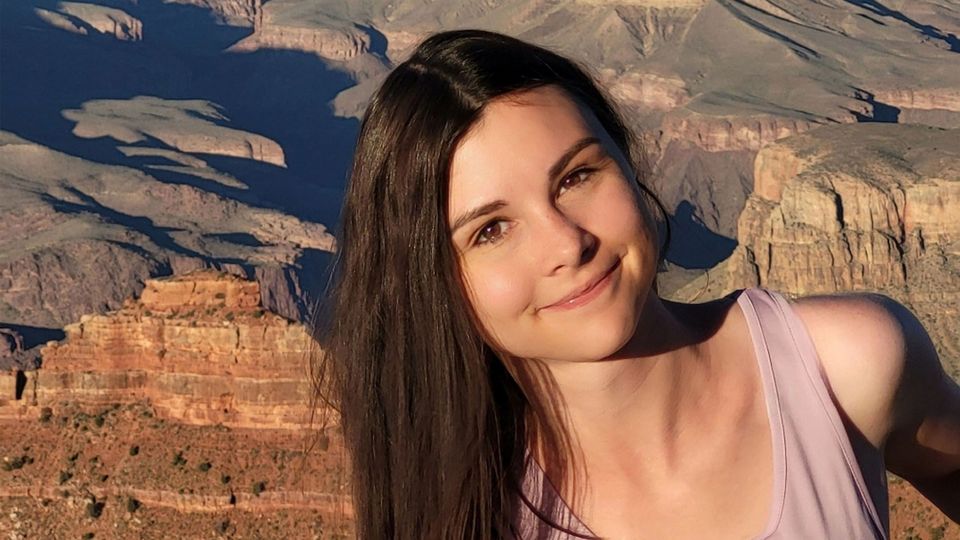
Bereits während ihrer Schulzeit haben Bettina die Fächer Mathematik und Physik sehr gefallen. Da ihr der praktische Bezug im BORG fehlte entschied sie…
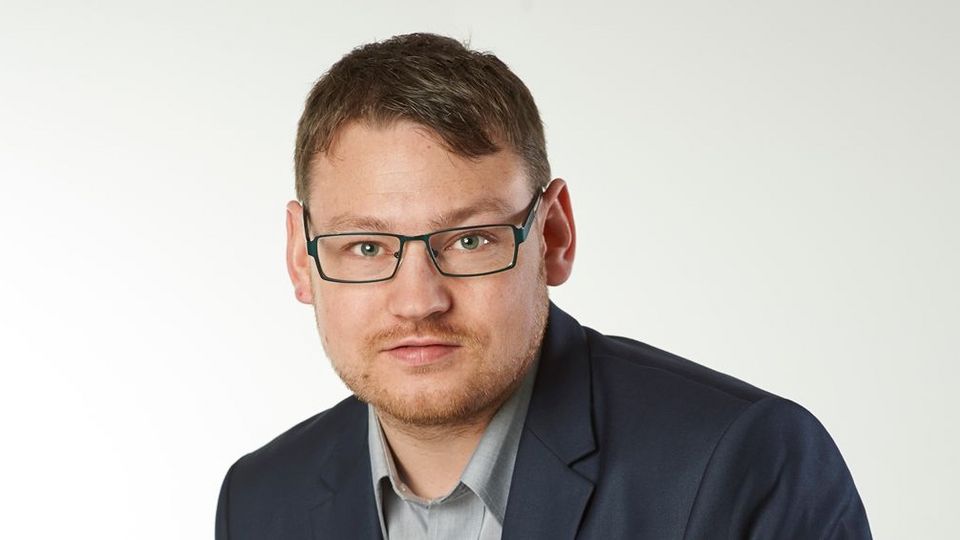
Für viele stellt sich mit etwa 15 Jahren die Frage, ob sie eine Lehre machen oder lieber weiterhin die Schulbank drücken wollen. Was die Wenigsten in…
Nach seiner Ausbildung an der HTL1 Lastenstraße mit Schwerpunkt Mechatronik und Automatisierungstechnik war Martin Pecnik klar, dass er sein Wissen in…
DI
Reinhard ToberFH-Prof. Dipl.-Ing. Dr.
Wolfgang WerthFH-Prof. DI Dr.
Josef TuppingerFH-Prof. Dipl.-Ing. Dr. techn.
Roland WillmannFH-Prof. Dipl.-Ing. (FH)
Christian MadritschFH-Prof. DI (FH) DI Dr.
Jürgen SchussmannDr.
Robert WinklerFH-Prof. DI Dr.
Franz Oswald Riemelmoser, MBAFH-Prof. Dr.
Christoph UngermannsFH-Prof. Dipl.-Ing. Dr. techn.
Klaus RaabFH-Prof. Dipl.-Ing.
Winfried EggerFH-Prof. Dipl.-Ing. Dr.
Johannes SturmFH-Prof.in DI Dr.in
Ulla Birnbacher, MScDipl.-Ing. (FH) Mag. (FH)
Michael RothDipl.-Ing. (FH)
Michael ReilMag.a
Angelika VoutsinasDipl.-Ing.
Christof MüllerDr. mont.
Sandra SchulnigIng.
Ingmar BihloMag.a
Anita BisterDr. rer. nat.
Ingrid KrumphalsDI
Beáta Bachratá, Ph.D.Ing.
Peter GrabnerMag.
Friedrich KreuzrieglerDI (FH)
Thomas STEFAN, MSc.Mag.a
Almut StarzacherMag.a
Eva Maria Stefaner, BA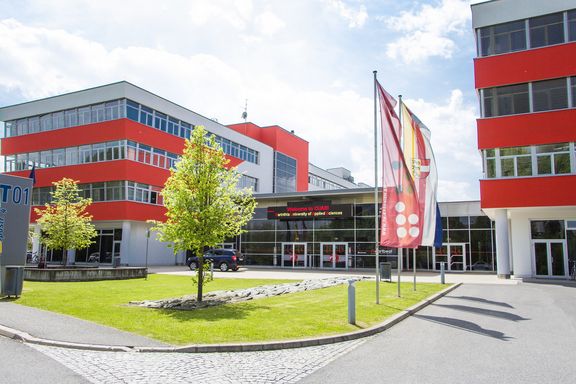

The Villach region combines tradition, cosmopolitanism and quality of life with the advantages of an innovative business location. Villach, a small town with about 60,000 inhabitants, is an international high-tech location with groundbreaking cooperation between science and industry and is also increasingly developing into a start-up town.
Situated directly at the intersection of three cultures, Villach, situated on the Drava river, is an important traffic junction in the Alps-Adriatic region. This special geographical location and the beautiful landscape around Villach and in the federal state of Carinthia have made the region a popular holiday destination for generations, further beyond the borders. The drinking water quality of the lakes and the particularly clean air make Villach and its surroundings an environmental paradise.
In addition to its geographical advantages, Austria also leads the world in terms of its social and health care system and is considered a particularly safe, prosperous and liveable country.
Despite the above-average prosperity and the comprehensive state social benefits, Villach compares favourably with many international destinations. The "small town bonus" comes into its own here and makes everyday life affordable.
Explore Campus Villach on a 360° Tour.
Make a virtual walk through the Science & Energy Labs – T10.
Motorway exit Wernberg, then on the B 83 approx. 2 km in the direction of Villach, after the Villach town sign the B83 passes under the A2 motorway, and then immediately right the first exit in the direction of MAGDALENEN SEE. Following the signs for Magdalenen See, the road leads through a small wooded area, always follow the road, after an S-curve past Magdalenen See (left) always straight ahead, cross the southern railway line and go uphill directly into the centre of St. Magdalene. Turn right at the top of the hill, down the road, the grounds of the technology park are already visible to the south, the chimney of the combined heat and power plant, and directly in the sharp right-hand bend turn left onto the grounds of the technology park.
Motorway exit Villach/Ossiacher See, then approx. 2 km in the direction of Villach, on the right is Gasthof Seehof, on the left is Lake Vassach, continue on the B33 left in the direction of east, Wernberg, Klagenfurt, always follow the B33, after approx. 4 km turn right in the direction of Magdalenen See. The road leads through a small forest, always follow the road, after an S-curve past Lake Magdalenen (left) always straight ahead, cross the southern railway line and go uphill directly into the centre of St.Magdalen. Turn right at the top of the hill, down the road, the grounds of the technology park are already visible to the south, the chimney of the combined heat and power plant, and directly in the sharp right-hand bend turn left onto the grounds of the technology park.
The bus company Dr. Richard runs from Villach city to the FH in about every 15 minutes. The timetables are coordinated with the timetables of the ÖBB.
Europastraße 4
9524 Villach, Austria
+43 5 90500 7700
villach[at]fh-kaernten[dot]at
Explore Campus Villach on a 360° Tour.